
Nature Trails in Nyungwe Forest National Park
When most travelers think about Rwanda, mountain gorilla trekking is usually the first experience that comes to mind. While gorilla trekking is undoubtedly the country’s most famous attraction, there is another extraordinary wildlife encounter that deserves a place on every Rwanda safari itinerary: golden monkey trekking in Rwanda.
Many visitors initially question whether golden monkey trekking is worth the extra time and cost, especially after securing a gorilla permit. Some assume that seeing monkeys will not be as exciting as seeing gorillas. However, those who participate in the trek often discover that golden monkey tracking offers a completely different experience that perfectly complements gorilla trekking rather than competing with it.
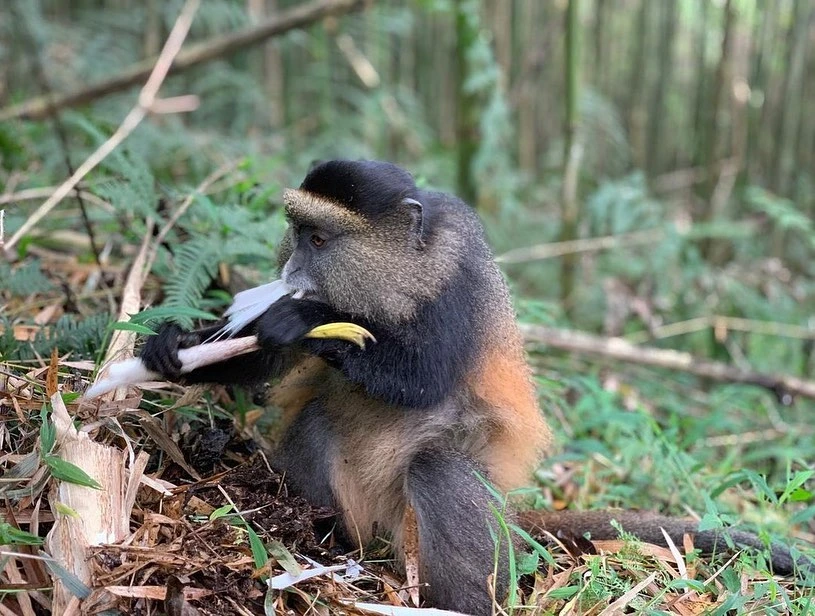
Golden monkey trekking allows visitors to observe one of the world’s rarest primates in its natural habitat while enjoying a relatively easy trek through the beautiful bamboo forests of Volcanoes National Park. With their striking golden-orange fur, playful behavior, and energetic personalities, golden monkeys provide a fascinating wildlife encounter that is both entertaining and memorable.
What is Golden Monkey Trekking in Rwanda?

Golden monkey trekking is a guided wildlife activity that takes place in Volcanoes National Park, Rwanda’s premier primate destination. The experience involves hiking into the park’s bamboo forests in search of habituated troops of endangered golden monkeys, which can be safely observed at close range once located.
Golden monkeys are a subspecies of the blue monkey and are found only in the Virunga Mountains ecosystem, which spans Rwanda, Uganda, and the Democratic Republic of Congo. Their limited geographical range makes them one of the most unique primates in Africa and a species that many wildlife enthusiasts dream of seeing.
Unlike mountain gorillas, which often spend long periods resting, feeding, or grooming, golden monkeys are incredibly active. They leap from branch to branch, forage for bamboo shoots, chase one another through the forest, and constantly interact within their social groups. This creates a dynamic and engaging experience that keeps visitors entertained throughout the trek.
Why Many Travelers Almost Skip Golden Monkey Trekking
One of the most common objections travelers have is:
“If I am already paying for gorilla trekking, do I really need another primate experience?”
This concern is understandable. Gorilla trekking is often the centerpiece of a Rwanda safari, and many travelers worry that golden monkey trekking may feel repetitive.
In reality, the two experiences are remarkably different.
Mountain gorilla trekking is often described as emotional, intimate, and deeply moving. Watching a gorilla family interact at close range creates a profound connection with one of humanity’s closest relatives.
Golden monkey trekking, on the other hand, is lively, energetic, and highly interactive. Instead of quietly observing a family group resting in the forest, visitors watch dozens of monkeys moving rapidly through the bamboo vegetation, climbing trees, feeding, and playing. The atmosphere is more active and fast-paced, providing a completely different perspective on Volcanoes National Park’s rich biodiversity.
Many travelers who initially viewed golden monkey trekking as an optional add-on later describe it as one of the most enjoyable and unexpected highlights of their trip.
Golden Monkey Trekking is Easier Than Gorilla Trekking
Another concern frequently raised by visitors is the physical challenge involved.
Many travelers worry that after completing a gorilla trek, they may not have the energy for another demanding hike. The good news is that golden monkey trekking is generally considered less strenuous than gorilla trekking.
Golden monkeys typically inhabit the lower-altitude bamboo forests of Volcanoes National Park, which are easier to access than some gorilla trekking sectors. Treks are often shorter, and visitors usually spend less time hiking before locating the monkeys.
This makes golden monkey trekking an excellent option for:
- Families with older children
- Senior travelers
- Visitors with moderate fitness levels
- Travelers seeking a lighter hiking experience
- Photographers who want more time observing wildlife
While trekking conditions can vary depending on the monkeys’ location, most visitors find the activity accessible and enjoyable.
Exceptional Photography Opportunities
For photographers, golden monkey trekking in Rwanda offers some of the best wildlife photography opportunities in the region.
One challenge many photographers face during gorilla trekking is the dense forest environment, which can make photography more difficult. Golden monkeys, however, are frequently found in bamboo forests with more open visibility and natural light.
Their vibrant golden-orange fur contrasts beautifully against the green vegetation, creating stunning images that stand out in any wildlife portfolio. Because the monkeys are constantly moving and interacting, photographers can capture a variety of behaviors, from feeding and grooming to jumping and playful social interactions.
Whether you are using a professional DSLR camera or simply taking photos with your smartphone, golden monkey trekking provides countless opportunities to capture remarkable wildlife moments.

A Rare Encounter Found in Few Places on Earth
One of the strongest reasons to include golden monkey trekking in your Rwanda itinerary is the rarity of the species itself.
Golden monkeys are found only within the Virunga Mountains region. Unlike many African wildlife species that can be seen across multiple countries and ecosystems, golden monkeys have a very limited natural range.
This means that travelers visiting Rwanda have the opportunity to experience something truly unique that cannot easily be replicated elsewhere. Seeing these endangered primates in the wild is a privilege that relatively few travelers ever experience.
For wildlife enthusiasts, birdwatchers, photographers, and conservation-minded travelers, the rarity of golden monkeys makes the trek particularly rewarding.
How Golden Monkey Trekking Supports Conservation
Many travelers today want their tourism spending to make a positive impact, and golden monkey trekking offers exactly that opportunity.
Revenue generated from permits and tourism activities directly supports conservation efforts within Volcanoes National Park. These funds help protect critical habitats, support anti-poaching initiatives, improve park management, and contribute to wildlife research programs.
Tourism revenue also benefits surrounding communities through employment opportunities, infrastructure development, education programs, and community projects. By participating in golden monkey trekking, visitors become active contributors to the long-term protection of Rwanda’s wildlife and natural heritage.
This connection between tourism and conservation has played a significant role in Rwanda’s success as one of Africa’s leading conservation destinations.

Why You Should Combine Golden Monkey Trekking with Gorilla Trekking
If you are already planning a gorilla trekking adventure, adding golden monkey trekking is one of the best ways to maximize your experience in Volcanoes National Park.
Gorilla trekking introduces visitors to the world’s largest primates and provides a powerful conservation story. Golden monkey trekking adds another dimension by showcasing the diversity of species that inhabit the Virunga ecosystem.
Together, these activities create a richer and more complete understanding of the park’s unique biodiversity. Rather than choosing one over the other, many experienced safari travelers recommend combining both experiences for the most rewarding wildlife adventure.
By doing so, visitors gain insight into different primate behaviors, habitats, and conservation challenges while enjoying two of Rwanda’s most iconic wildlife encounters.
Best Time for Golden Monkey Trekking in Rwanda
Golden monkey trekking can be enjoyed throughout the year, but the most popular periods are during Rwanda’s dry seasons.
June to September
This is generally considered the peak season for trekking. Trails are drier, hiking conditions are easier, and visibility within the forest is often better.
December to February
This is another excellent period for trekking, with pleasant weather and comfortable hiking conditions.
March to May and October to November
The rainy seasons bring lush vegetation and beautiful scenery. Although trails can be muddier, the forests are exceptionally green, creating excellent opportunities for nature photography.
Because golden monkeys remain active year-round, visitors can enjoy successful trekking experiences in any season.
Is Golden Monkey Trekking Worth It?
For travelers debating whether to include golden monkey trekking in their Rwanda safari, the answer is simple: yes.
The experience offers something completely different from gorilla trekking. It is easier, highly engaging, excellent for photography, and provides a rare opportunity to observe one of Africa’s most unique and endangered primates in the wild.
Most importantly, it allows visitors to appreciate the incredible diversity of Volcanoes National Park beyond its famous gorillas.
Final Thoughts
Golden monkey trekking in Rwanda is one of the country’s most rewarding wildlife experiences and remains surprisingly underrated compared to gorilla trekking. From the excitement of watching playful monkeys leap through bamboo forests to the satisfaction of supporting conservation efforts, the experience offers tremendous value for travelers seeking a deeper connection with Rwanda’s natural heritage.
Whether you are a wildlife enthusiast, photographer, conservation supporter, or first-time safari traveler, golden monkey trekking adds a unique and unforgettable dimension to any Rwanda adventure. For many visitors, it becomes the unexpected highlight they never knew they needed.